The Four O'Clock Table: Why a Kitchen Feeds Its Own First
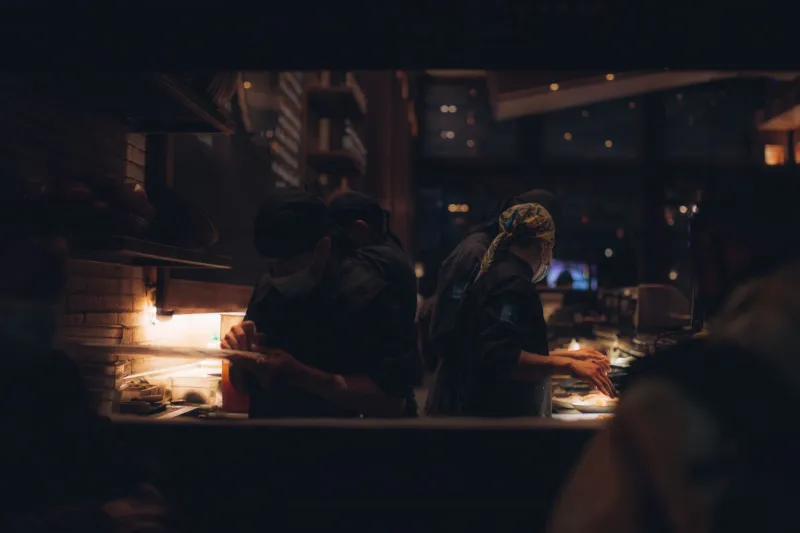
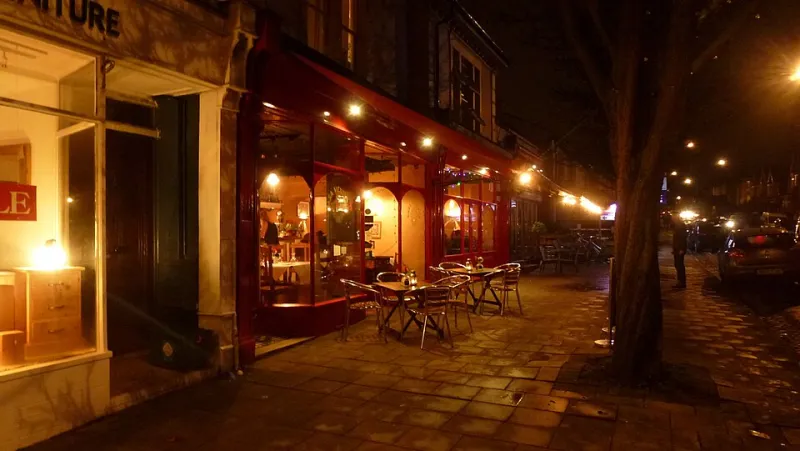
At four o'clock on a grey November afternoon, The Bay Tree in Bury does something that never appears on the menu. The kitchen stops. Not completely — there is still a stockpot to check, a delivery to sign for, a tray of something cooling on the side. But for twenty minutes or so, the team sits down together and eats. This is the staff tea: a proper plate, a proper pause, and the quiet beginning of the evening service.
It would be easy to make this sound like a quirky ritual. It is not. The four o'clock table is one of the most practical things a restaurant does. It is also one of the most revealing. What a kitchen feeds its own team, and how it feeds them, says more about the place than any line on the menu.
The table is a handover, not a break
The staff meal is often described as a break, but that undersells it. At The Bay Tree, it works more like a handover. Front of house and kitchen eat at the same table — or as close to the same table as a narrow back corridor allows. The people who will soon be greeting guests, taking orders and running plates sit alongside the people who will be cooking them. For a few minutes, everyone is on the same side of the pass.
That matters. A service is a chain of small communications: a dish that is running low, a table that is celebrating, a guest who needs a little more time, a sauce that is tighter than it was yesterday. Some of that gets said in the staff tea without anyone calling it a briefing. You notice who is quiet. You notice who is buzzing. You notice that the leeks have come in particularly well and that the last of the week's bread is now somewhere between a loaf and a crumb.
The meal itself is rarely fancy. It is the kind of cooking that happens when a kitchen has trim, roots and a little imagination. In November, that might mean a pot of something soft and warming built from the odds and ends of the vegetable prep: leek tops, celeriac peelings, a few potatoes that were never going to make the cut for the plate. The bread gets toasted, rubbed with garlic, maybe torn into a bowl with oil and vinegar. If there is a bit of meat trim, it goes into the pot or under the grill. If there isn't, the vegetables have to do the work.
This is not a bin-clearing exercise. There is a difference between using what you have and palming off what you don't want. The staff tea only works if it is cooked with the same care as anything else — seasoned properly, served hot, given a minute of thought. A kitchen that can't cook for its own team is unlikely to be at its best cooking for strangers.
Thrift with a bit of pride
Restaurant kitchens are often talked about in terms of waste, and rightly so. Food costs money, and margins are tight. But the staff meal is not just an exercise in saving a few pounds. It is where thrift becomes a habit, and where that habit becomes flavour.
The last of the week's bread is a good example. By Thursday or Friday, it is not at its best for the table. But cubed and toasted, it becomes crumbs for a topping or a crisp counterpoint to something soft. Soaked and squeezed, it can thicken a soup. Torn and fried, it is a reason to eat a bowl of greens with more enthusiasm than you might expect. None of this is new. It is just cooking — the kind that has always happened in kitchens where people pay attention.
The same goes for roots and brassicas. A cauliflower has leaves that many cooks discard; here they might be charred and dressed, or chopped into a soup. Carrot peelings can go into a stock, but carrot trim can also be roasted with cumin and served with yoghurt. The staff tea is seasonal by default, because it follows the trim. In autumn and winter, that means earthy, sweet, sturdy things: squash, cabbage, onions, potatoes, the last of the outdoor tomatoes if you are lucky. In summer, it shifts. The table changes without anyone writing a new menu.
There is a useful discipline in that. Chefs learn to build a plate from what is there rather than what they wish was there. They learn to taste and adjust. They learn that a staff meal is not a lesser meal. It is the most honest menu in the building.
What a sit-down does to a service
The practical benefits of the four o'clock table are not hard to see. People who have eaten are calmer. People who have sat down for a few minutes are less likely to start service already behind. A server who has had a proper plate of food is not thinking about their next chance to eat; they are thinking about the guest in front of them. A chef who has had a moment to breathe is less likely to snap at the first docket.
But there is something less tangible, too. The staff tea sets the temperature. If the meal is rushed, snatched standing up, eaten in silence while someone scrolls a phone, that mood can carry into the evening. If it is a proper sit-down — even a short one — the team arrives at service a little more together. The welcome at the door starts in the back corridor.
This is not a soft idea. Hospitality is a chain: kitchen to pass, pass to floor, floor to table. If the first link is cold, the last link usually is too. The four o'clock table is the first cover of the night. Nobody books it. Nobody photographs it. But it shapes everything that follows.
At The Bay Tree, the rule is simple enough: if there is a pot, there is a bowl for everyone. The person on wash-up eats, too. The late arrival gets a plate, not a shrug. The meal is not a meeting, and it is not a performance. It is a pause with a plate. In a busy kitchen, that pause is not a luxury; it is maintenance.
You meet it at the door
Diners will never see the four o'clock table. They will see the result: a team that seems unhurried, a kitchen that feels steady, a welcome that is warm without being forced. They might notice that the soup has a depth that comes from a good stock, or that the bread is doing something useful rather than just sitting in a basket. They might not connect it to the staff meal at all.
That is fine. The best hospitality is often invisible in the moment. But it has to start somewhere. At The Bay Tree, it starts at four, with a table, a pot and the people who will soon be looking after everyone else.
A kitchen that feeds its own first is a kitchen that can feed you well. The staff tea is not a secret. It is a habit. And like most good habits, it shows.