The Gravy Test: Why Rag Pudding Is Bury's Quiet Winter Classic

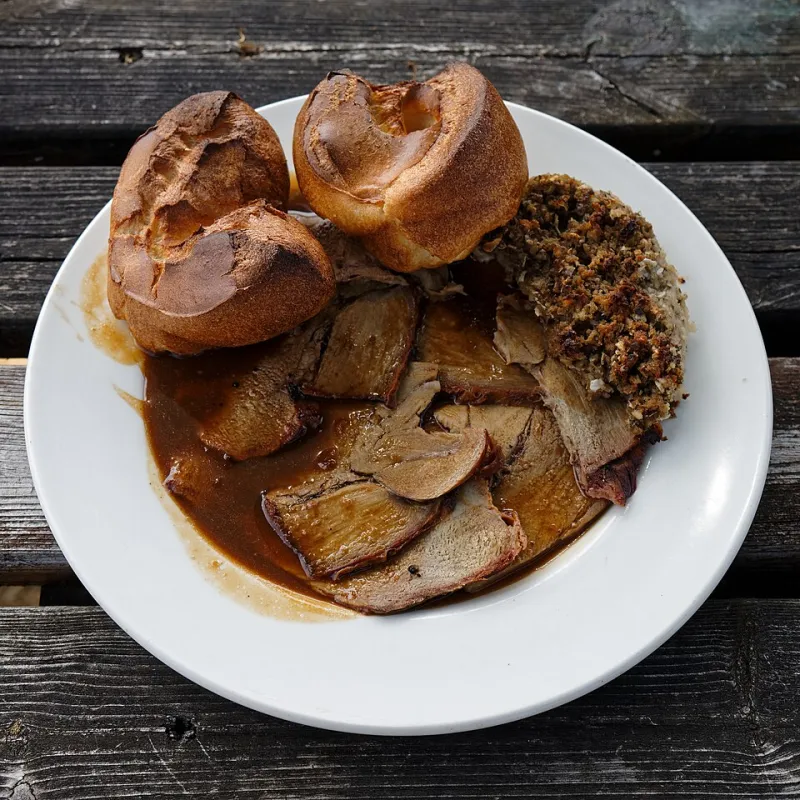
Photo: rag pudding suet pastry minced beef steamed pudding with gravy rustic plate, via images-wixmp-ed30a86b8c4ca887773594c2.wixmp.com
Bury has a famous pudding. You know the one. It turns up in breakfasts, in barm cakes, in gift boxes and in the sort of food-writing sentences that use the word 'iconic' before nine in the morning. Black pudding has earned its reputation, and nobody needs to argue about that.
But there is another pudding in the town's story, and it is far less noisy. Rag pudding is minced beef and onions wrapped in suet pastry and steamed until the filling is soft and savoury and the crust has taken on that gentle, almost dumpling-like richness. It is a Lancashire dish with a long working history, the kind of food that once filled people up after a shift rather than posing for a photograph. In 2026, with winter menus being written and rewritten, it is worth asking why we let it slip into the background.
A pudding with a working history
Rag pudding belongs to the same broad family as steak pudding and kidney pudding: suet crust, slow steam, gravy. The name is often explained by the old habit of wrapping the filling in a cloth—a rag—before it went into the pot. Whether every household did it exactly that way is less important than what the dish represents: practical cooking, made from ordinary things, with time doing most of the work.
It has survived in butchers, market stalls, chip shops and home kitchens around Bury and the wider north-west. But survival is not the same as celebration. Black pudding has a place in the town's identity that rag pudding has never quite been allowed. One is a souvenir. The other is a supper.
Why the famous pudding casts such a long shadow
Part of it is looks. Black pudding is neat, sliceable, dark and distinctive. Rag pudding is a pale suet parcel sitting in gravy. It is not a pretty dish. It does not photograph well after a long steam, and it does not fit neatly into a breakfast bap. It asks for a plate, a fork and a bit of patience.
Part of it is time. A proper rag pudding is not a fifteen-minute tea. The pastry needs making, the filling needs seasoning, the pudding needs steaming. That is not a flaw in a restaurant kitchen; it is a rhythm. Winter menus are full of dishes that benefit from long, gentle cooking—braises, pies, puddings, soups. Rag pudding fits that mood better than almost anything else.
And part of it is the gravy. More on that in a moment.
The gravy is not a side issue
A rag pudding without proper gravy is a pastry parcel looking for its purpose. The gravy is what ties the suet crust to the beef and onions; it softens the edges, carries the pepper and makes the whole thing feel generous rather than dry. Too often, though, gravy is treated as a generic brown sauce that arrives in a small jug and is forgotten by the second mouthful.
A rag pudding gravy should taste of beef and onion, with enough body to coat the back of a spoon but not so much that it turns into wallpaper paste. A little pepper is welcome. A splash of something sharp—vinegar, perhaps, or a spoonful of pickle—can lift the richness. It should be made with the same care as the pudding itself, because in this dish the two are not separate courses. They are one plate.
That is the gravy test. If a kitchen can make a gravy that tastes like it belongs to the pudding rather than arrived from a catering tub, it understands the dish.
What a winter menu could do with it
Rag pudding does not need reinventing. It needs serving properly. That means a deep plate, a generous spoonful of gravy, and something sharp or green alongside—buttered greens, a few pickled onions, maybe a heap of mash if you are feeling unstoppable. It works at lunch and at supper. It works after a cold walk. It works as the sort of dish that makes a neighbourhood restaurant feel like a neighbourhood restaurant.
At The Bay Tree, the appeal is obvious: a seasonal plate with local roots, a warm welcome and no need to shout about either. Rag pudding is not a novelty. It is not a heritage exhibit. It is dinner, done with care, in a room where somebody is glad you came in.
A quiet comeback, served hot
The case for rag pudding is not nostalgia for its own sake. It is simply that a good dish should not be left to fade because a more famous neighbour has better marketing. Bury can hold both puddings in its story. One can be the souvenir. The other can be the winter table.
If 2026 is the year we start taking cold-weather menus a little more seriously, rag pudding deserves a place on them—with a proper gravy, a warm plate and a welcome that does not need a slogan. Some classics announce themselves. This one just needs to be passed across the table.