The Second Shift: Why Black Pudding Belongs at the Evening Table
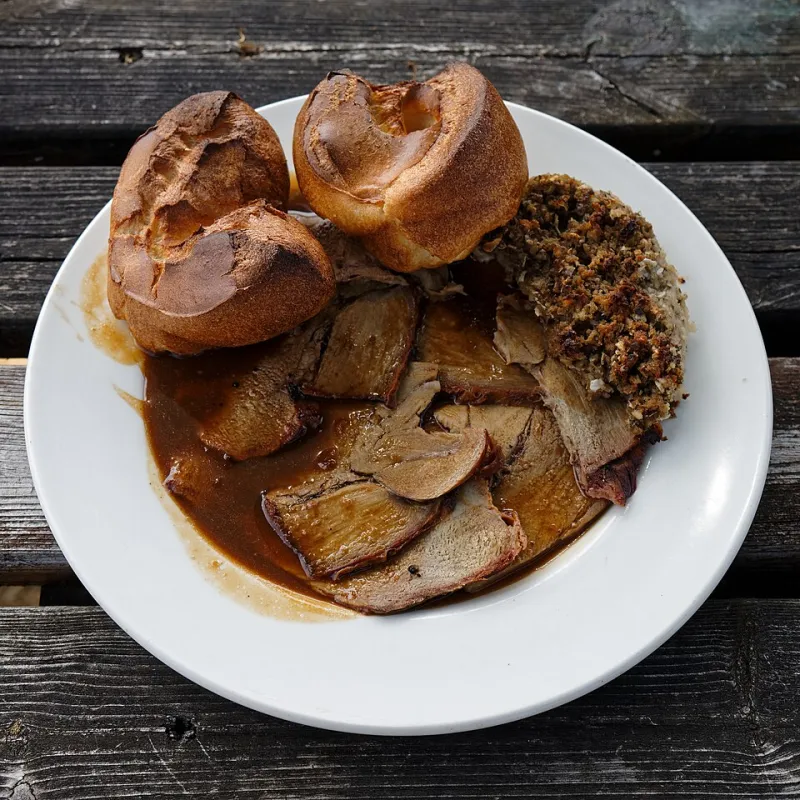
Photo: Acabashi, CC BY-SA 4.0, via Wikimedia Commons
There is a particular look that crosses a face when black pudding is suggested after six o'clock. It is not disgust, exactly. It is more like mild confusion, the way you might react to being offered a cup of tea in a wine glass. We know the ingredient. We love the ingredient. We are just not entirely sure it has any business being out this late.
At The Bay Tree, we would like to gently disagree.
Black pudding has spent a long time being the supporting act at breakfast — the dark, crumbly punctuation mark beside an egg, the thing that makes a full English feel like it means business. And fair enough. It has earned that. But an ingredient this good should not be clocking off at eleven in the morning. It has depth, it has salt, it has a texture that can hold its own against something sweet or something sharp. That is not a breakfast ingredient. That is a dinner ingredient wearing a morning coat.
The case, then, for the second shift.
It Is a Seasoning, Not a Sausage
The first thing to get straight is what black pudding actually is in a kitchen. Yes, it is a sausage in the technical sense. But cooked well and crumbled, it behaves more like a seasoning — a dark, mineral, faintly peppery note that can lift a whole plate. Think of it the way you would think of anchovy, or a good blue cheese, or a spoonful of something deeply savoury stirred into a sauce. A little goes a long way, and it makes everything around it taste more like itself.
That is why it works so well with the roots we are pulling out of the ground right now. Late November is celeriac and parsnip weather. It is the point in the year when the kitchen stops pretending salad is still the main event and starts roasting things until they go sweet at the edges. A wedge of roast celeriac, caramelised on the outside and soft in the middle, does not need much. A scattering of black pudding, fried until the edges crisp, gives it the salt and the savoury backbone it was quietly missing. Add a spoonful of something sharp — a mustard cream, a little pickled walnut — and you have a plate that tastes like the end of the year.
The Orchard Connection
Here is where it gets interesting. Black pudding and orchard fruit is not an obvious pairing, but it is an old one in this part of the world. The sweetness of a roasted apple or a poached pear cuts through the richness in a way that feels almost medicinal. It is the same logic as pork and apple, or game and quince — the fruit does not compete, it clears the palate for the next mouthful.
At this time of year, we are leaning on apples that have spent a few weeks in store, getting sharper and more concentrated. Roasted in their skins with a little butter and thyme, they go sticky and deep. Against the dark crumb of the pudding, they taste like they were always meant to be there. A few pickled shallots or a spoonful of chutney on the side adds the vinegar note that keeps the whole thing from tipping into heaviness.
This is not complicated cooking. It is just a matter of trusting the ingredient to do more than one job.
Sourcing Matters, and Bury Knows It
You cannot make this argument in a vacuum. Black pudding is only as good as what goes into it, and Bury has a long, proud history of getting it right. The town's market has been selling the stuff for generations, and the butchers who make it here tend to be the sort of people who will tell you exactly what is in it and why. That matters. A black pudding made with good blood, proper oats and a decent hand with the seasoning is a completely different creature from the pale, over-processed version that turns up in some supermarkets.
We buy ours close to home, from people who have been making it the same way for years. It is not a novelty to them. It is a craft, and it deserves to be treated as one — which means not just frying it and putting it next to an egg, but thinking about where it sits on a plate and what it is doing there.
How to Serve It After Dark
If you want to try this at home, start simple. Crumble a little black pudding into a pan with a knob of butter and let it crisp. Roast some root vegetables — celeriac, parsnip, a few carrots — until they are sweet and slightly charred. Put the pudding among them, add a sharp pickle or a spoonful of mustard, and call it supper. It is not a recipe so much as a way of thinking.
At The Bay Tree, we have been serving it with roasted apples and a cider cream, and it has become one of those dishes that people order out of curiosity and then order again out of greed. That is the test, really. Not whether it sounds clever, but whether you want a second plate.
The Warm Argument
There is a school of thought that says some ingredients should stay where they belong. Black pudding belongs at breakfast, full stop, and moving it to the evening is the kind of thing that gets a chef a raised eyebrow in a good way or a bad way, depending on the room.
But a neighbourhood restaurant is exactly the place to have that argument. We are not here to police the menu. We are here to cook the things we love and see if you love them too. Black pudding is a Bury ingredient, and Bury is a town that knows how to eat well at any hour. It seems a shame to keep such a good thing locked to the morning.
So consider this an invitation. Come in, order the pudding, and see what it does when the candles are lit and the roots are roasted. It might just change your mind about what belongs on a dinner plate. And if it does not, well — we will see you at breakfast.