The Small Comforts That Make a Winter Meal Feel Generous
A good winter meal can be undone by surprisingly small things. Not the cooking — the cooking can be excellent — but the seat beside a door that opens every ninety seconds, the plate that goes cold before the gravy arrives, the coat draped over a chair because there is nowhere else for it to go. At The Bay Tree, we have been looking at our dining room the way we look at a recipe: what is working, what is missing, and what needs a little more warmth.
Comfort is not a soft-furnishing afterthought. In a Lancashire winter, it is part of hospitality. It is also part of the menu, in the sense that a hot plate of food should reach the table hot, and a guest should be able to settle into an evening rather than spend it quietly rearranging themselves around a draught.
Comfort begins before the first forkful
A winter dining room has a job to do before anyone tastes anything. It should feel warm without feeling sealed up, bright enough to read the menu but not so bright that it fights the dark outside. The first minute matters: the rush of cold air as the door closes, the smell of the kitchen, somewhere to put a wet umbrella, a welcome that is not buried under a clipboard.
We are not talking about turning a restaurant into a front room. A dining room still needs pace and purpose. But there is a difference between a busy room and a room that makes you feel like you are in the way. The best winter rooms give you a small, unspoken permission to stay: take your time, hang up your coat, warm your hands.
Somewhere sensible for wet coats
This sounds mundane because it is mundane. It is also one of the first things guests notice in November. Coats over chair backs crowd the table, block the aisle and end up on the floor. Bags from Bury Market, damp from the walk up from the bus station, need more than a hopeful hook near the toilets.
A workable coat plan is not glamorous: enough hooks, a proper rail, baskets for hats and scarves, somewhere to put a dripping umbrella that is not the middle of the floor. It also means staff being alert to the guest who arrives soaked through and is quietly trying not to make a fuss. A small practical kindness — taking the coat, offering a drier seat — can do more for an evening than a complicated garnish.
Warm plates are not a gimmick
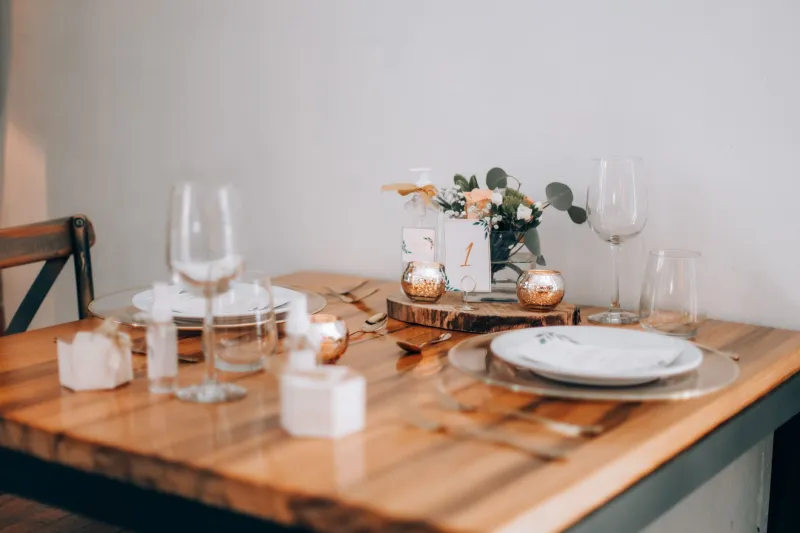
A cold plate steals heat from the food. That is simple physics, and it matters most in winter, when the dish in question is a slow-cooked stew, a pie with a proper lid, or a Sunday roast with gravy that should still be steaming at the last forkful. Warm plates are one of the cheapest, least showy improvements a kitchen can make.
At The Bay Tree, we would rather spend a little time on plate warmers than on another decorative flourish nobody remembers. It is not about scalding china or theatrical heat. It is about giving a winter dish a fair start. The same goes for cold plates when they are needed, and for keeping the pass organised so that food does not sit under lights while someone hunts for cutlery. Comfort, in this sense, is a kitchen discipline.
Light that works with the dark
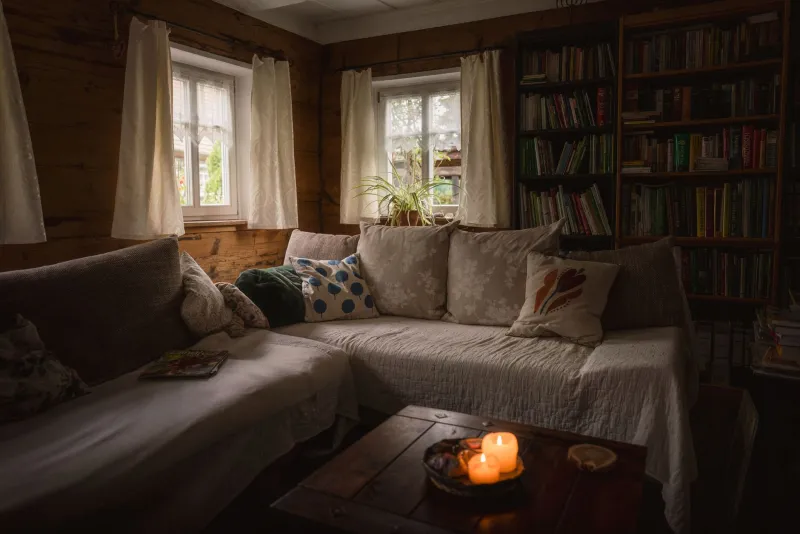
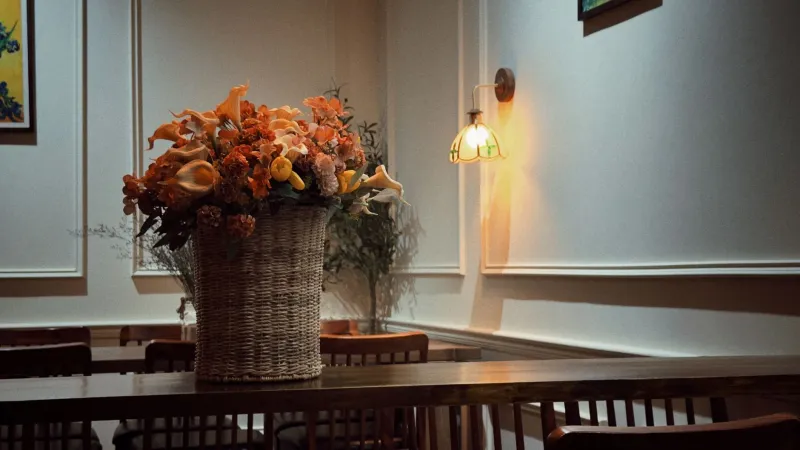
November in Bury gets dark early. By four o'clock, the windows are black and the streetlights are on. A dining room can either treat that as a problem to be blasted away with overhead lighting, or as part of the atmosphere. We prefer the second approach: pools of warm light, lamps low enough to flatter a table, candles that are not a fire hazard, and enough glow to see what you are eating without feeling like you are in an operating theatre.
Good winter lighting also has a practical side. Guests should be able to read a menu and see their companions without squinting. Staff should be able to see a table that needs attention. The trick is contrast: brighter where it matters, softer where people are settling in. The dark outside is not the enemy. It is the reason the room feels like somewhere to be.
The radiator table earns its keep
Every winter dining room has a coveted seat near the heat. It is usually the one regulars ask for without asking, the one that feels like a small prize on a wet Tuesday. But comfort should not depend on getting the lucky table. If only one corner is warm, the rest of the room is being asked to make do.
That means looking at draughts honestly: doors that do not close properly, gaps under windows, the route between the kitchen and the dining room, the spot where every new arrival pauses with the door open. A screen or a curtain is not a failure of style. It is good manners. So is giving guests a little space between tables in winter, when everyone is carrying more layers and more bags.
Comfort is part of the menu
None of this is about turning The Bay Tree into a lounge. It is about recognising that a winter meal is a physical experience as much as a gustatory one. The food can be seasonal and thoughtful; the room should meet it halfway. Warm plates, a place for the coat, light that respects the hour, a seat that is not in the line of a draught — these are not extras. They are the conditions under which a good meal actually happens.
So when we rethink the dining room for the cold months, we are not choosing wallpaper. We are asking what a guest needs in order to relax enough to enjoy what the kitchen has done. The answer is usually small, practical and unglamorous. That is fine. Hospitality often is. And in winter, a warm room is one of the clearest ways a restaurant can say: we are glad you came out.